
Some of the most expensive transactions in DeFi are not swaps, bridges, or liquidations. They are small cleanup actions performed after the fact—especially revoking token approvals that were granted without a plan. The counterintuitive part is that approval management is not mainly a gas problem. It is a permissions problem that happens to have a gas bill attached.
For users moving between Ethereum, Arbitrum, Base, Polygon, and other networks, the challenge becomes harder because one wallet address does not represent one shared account state. Each chain maintains its own balances, allowances, contracts, and transaction history. A good multi-chain workflow therefore needs two forms of discipline: understand what a token approval permits, then decide when the security benefit of changing it justifies the network fee.
Why token approvals are permissions, not payments
When a decentralized exchange or lending application asks for an ERC-20 token approval, it is not taking the tokens immediately. The transaction writes an allowance into the token contract. That allowance says, in effect, “this particular spender contract may move up to this amount of my tokens from this wallet.” The spender is normally a smart contract, not the website itself, and the permission remains in place until it is reduced, replaced, or consumed according to the token’s rules.
This distinction explains a common misconception: disconnecting a wallet from a website does not revoke an approval. Closing a browser tab does not revoke it either. The allowance lives on-chain. If the approved contract is later compromised, upgraded in an unexpected way, or simply more powerful than the user realized, an unused allowance can remain an avenue of loss. That does not mean every approval is dangerous, but it does mean approval management deserves the same deliberate attention as password and account security.
“Unlimited approval” is another phrase that deserves precision. In many interfaces, the user approves a very large maximum amount to avoid signing a new approval transaction every time the application is used. This can save one transaction later, but it expands the potential exposure if the spender is abused. A limited approval reduces the maximum amount that the contract can pull, yet it may require more approvals—and therefore more gas—during repeated use.
The useful mental model is not “approve or do not approve.” It is a three-part decision: which contract is receiving permission, how much permission is being granted, and how long that permission should remain useful. DeFi users often focus on the token and forget the spender. The spender contract is the critical object to inspect because that is the address authorized to call the token’s transfer function on the wallet’s behalf.
Why multi-chain approval management is easy to misunderstand
A wallet address can look identical across several EVM-compatible networks, but the blockchains do not share state. An allowance granted to a decentralized exchange on Ethereum does not automatically authorize a similarly named contract on Base. The same is true for balances, NFT ownership, debts, and pending transactions. A user who reviews approvals on one network has not reviewed approvals everywhere.
This separation creates a practical risk: users may remember the application but not the chain. They might revoke an approval on Ethereum while an old allowance remains active on an L2. Conversely, they may see a familiar contract address on another network and assume it has the same code or governance. Similar interfaces and repeated contract names are useful for usability, but they can encourage false equivalence.
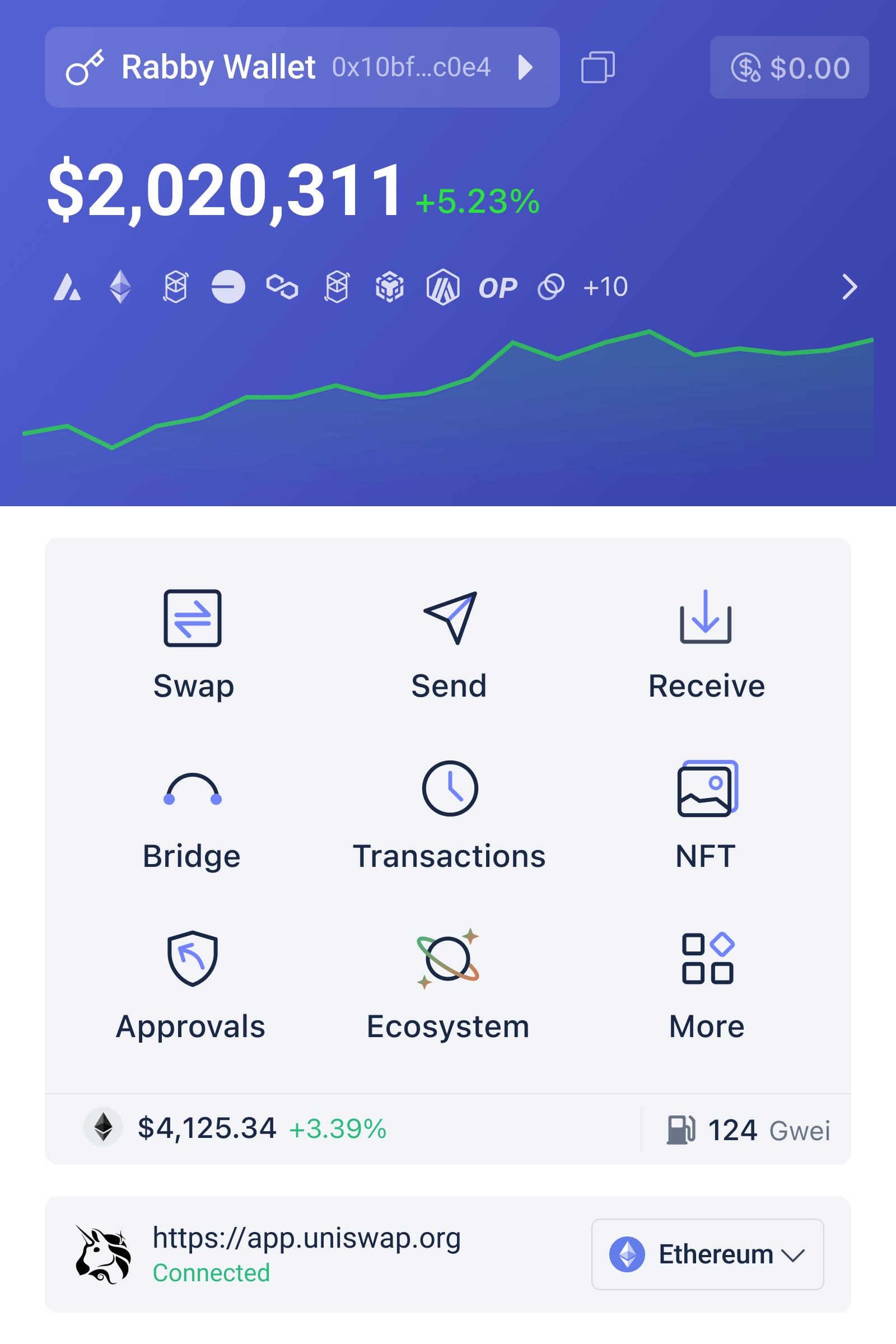
Before interacting with a multi-chain application, confirm three things in the wallet interface: the active network, the token contract, and the spender address. A sensible transaction preview should make it possible to notice whether the action is an approval, a transfer, a swap, or a contract interaction with several steps. If you are installing a wallet for this workflow, use the official source and verify the extension’s origin; the rabby extension download can serve as a starting point, but users should still check that the browser installation and permissions look expected.
There is also a subtle operational issue. A low-fee chain can make users less cautious because each individual transaction appears cheap. Yet cheap transactions encourage more experimentation, more approvals, and more abandoned positions. The result can be a larger permission surface even when the dollar cost of each transaction is small. Cost efficiency and risk efficiency are related, but they are not the same thing.
Gas optimization begins before the revoke button
On Ethereum, the cost of an approval or revocation depends on gas used and the price paid per unit of gas. On many layer-2 networks, the calculation also reflects the cost of posting transaction data back to a parent chain, along with the local execution fee. Other networks have different fee markets and confirmation behavior. The broad lesson is that “cheap chain” is not a permanent property. Fees vary with congestion, transaction type, and network design.
Approval transactions are usually simple compared with complex swaps, but simple does not mean free. A revocation changes contract storage, and storage writes are a meaningful part of Ethereum’s execution cost. The cost can also differ depending on whether the operation sets an allowance to zero, replaces one nonzero allowance with another, or uses an application-specific permission mechanism. Token implementations are not perfectly uniform, so a wallet should be treated as a decision aid rather than a guarantee that every token behaves identically.
For most users, the highest-value gas optimization is reducing unnecessary transactions. If an application requires an approval followed by a swap, combining steps may not always be possible, but users can avoid approving a token merely to test an interface. They can also avoid making several small approvals in succession by estimating the amount needed for a planned session. That does not eliminate security trade-offs, but it makes the permission deliberate.
Timing matters too. If an approval is not urgent, waiting for lower network demand can reduce the fee, particularly on Ethereum. On EIP-1559 networks, a transaction generally includes a base fee determined by the protocol and a priority fee offered to validators. Users do not control the base fee directly. They can, however, choose whether to submit now, adjust a fee setting within sensible bounds, or wait. On an L2, the relevant fee dynamics may be different, so copying Ethereum fee assumptions onto every network is unreliable.
Batching can be attractive when supported safely. A batch may reduce wallet interactions or combine multiple operations, but it does not magically make every underlying action cheap. Each contract call still consumes execution resources, and a more complex batch can be harder to understand. The correct question is not “does batching save gas?” but “does the reduction in overhead justify the additional contract complexity and signing risk?”
When should a user revoke an approval?
Revoking an allowance is most compelling when the spender is no longer needed, the associated application has been abandoned, the approved amount is excessive relative to the intended use, or the user has reason to doubt the contract or interaction. It is also a reasonable response after a wallet migration or a period of aggressive experimentation across unfamiliar protocols.
But revocation is not a universal safety ritual. It costs gas, and it does not reverse a transfer that has already occurred. If a malicious contract has already moved funds, setting the allowance to zero afterward cannot recover them. In an active strategy, repeatedly revoking and re-approving can create more transactions, more opportunities for signing the wrong request, and more operational friction without proportionate benefit.
A practical approach is to treat approvals as an inventory. Keep permissions that support a known, actively used strategy; reduce or remove permissions tied to completed experiments; and investigate any spender that you cannot identify. For a long-term cold-storage-style wallet, a minimal approval footprint is generally easier to reason about than a broad collection of old allowances. For a trading wallet used daily, a carefully bounded allowance may offer a better balance between convenience and exposure.
It is worth separating allowance risk from wallet compromise. If the private key or seed phrase is exposed, revoking approvals alone is not enough; an attacker can sign new transactions. If only a particular spender is questionable, changing that allowance may address the relevant risk. This distinction determines the response. A compromised key calls for moving assets to a new wallet, while a questionable approval may call for reviewing and revoking permissions on the affected chain.
A reusable approval and gas checklist
Before signing, ask what the transaction is changing. If it is an approval, identify the spender and the amount. If the amount is unlimited, ask whether the convenience is worth the larger theoretical exposure. If the token is valuable and the protocol will be used once, a limited approval may be sensible. If the protocol is well understood and used repeatedly, an allowance sized for several expected transactions may reduce repeated fees without granting an unnecessarily broad maximum.
Next, confirm the network and the fee asset. A wallet may hold a valuable stablecoin but lack the native token needed to pay gas on that chain. This is a frequent source of confusion for users who bridge assets and then discover that the destination wallet cannot approve, swap, or revoke anything. Keep a modest amount of the relevant network’s gas token available, but avoid moving funds solely to perform low-value cleanup unless the security reason is meaningful.
Then examine the timing. If the transaction is routine, compare the estimated fee with the value and urgency of the action. If it is a response to a suspected exploit, speed may matter more than optimization. Waiting for a cheaper fee is not a good trade if the allowance is actively being abused. Conversely, if the approval belongs to an old protocol and no threat is apparent, scheduling cleanup during a lower-demand period may be rational.
Finally, record what you changed. A simple private note identifying the chain, token, spender, and purpose can prevent repeated investigation. This is particularly useful for US users managing taxable DeFi activity across multiple networks, because transaction history, gas costs, and token movements may need to be reconciled later. Approval records do not determine tax treatment by themselves, but organized records reduce the chance that security maintenance becomes an accounting mystery.
What to watch as wallet permissions evolve
Approval systems may become more flexible through signature-based permissions, account abstraction, session keys, or application-specific spending controls. These tools can improve usability by separating a user’s long-term key from routine actions. They can also create new questions: who can interpret the permission, how long does it last, can it be canceled, and what happens if the relayer or supporting service fails?
The direction is promising but not settled. A permission that is more convenient is not automatically safer. The strongest designs will make scope, expiration, revocation, and beneficiary visible in a form ordinary users can understand. Until then, wallet previews and careful chain selection remain important defenses against signing something broader than intended.
The near-term signal to watch is not simply lower gas. It is whether wallets make permissions legible across networks without hiding the underlying contract mechanics. If users can see which chain, token, spender, amount, and duration are involved, they can make better decisions even when fees fluctuate. If interfaces compress those details into a reassuring button, cheaper transactions may merely make poor permissions easier to accumulate.
Frequently asked questions
Does disconnecting my wallet revoke token approvals?
No. Disconnecting a wallet only ends the website connection in that session. The allowance remains recorded in the token contract until it is changed on-chain. To reduce or remove it, the user must submit an appropriate transaction on the same network where the approval was granted.
Is an unlimited approval always unsafe?
No, but it creates a larger maximum exposure if the approved spender is exploited or misused. A limited approval can reduce that exposure, while an unlimited approval can save repeated approval transactions. The right choice depends on the protocol, the token’s value, how often the application is used, and the user’s willingness to manage permissions actively.
Can I revoke an approval without paying gas?
Usually not, because changing an on-chain allowance requires a transaction and therefore a network fee. The fee may be relatively low on some networks and higher on others. A signature-based permission may have different mechanics, but users should still confirm how cancellation works rather than assuming every permission can be removed off-chain.
Multi-chain approval management is ultimately a practice of matching permissions to purpose. The cheapest transaction is not always the best transaction, and the safest-looking habit is not always worth repeating mechanically. Review the spender, choose an allowance deliberately, understand the chain-specific fee, and revoke when the security benefit is greater than the cost and complexity. That framework remains useful whether gas is expensive, a layer-2 is quiet, or a new permission model changes how DeFi applications request access.
Blog delen
Vind je deze post waardevol? Leuk als je deze blog wilt delen!
Zo kun je ook de mensen om jou heen inspireren tot (nog) meer Succes & Geluk en Financiële Vrijheid!
Reacties, vragen of suggesties?
Deel jouw reactie hieronder.
En heb je vragen, suggesties of een interessant onderwerp waarover je graag in de toekomst een blog zou willen lezen?
Laat het weten!